Student Recruiting
What CDL Students Want Before They Enroll — And What Most School Websites Still Leave Unanswered
Recent research into private CDL school websites, student questions, program pages, campus tours, training transparency and enrollment processes points to one clear opportunity: answer more of the questions students already have before asking them to commit.
Original Research
Based on recent Truck School Marketing reviews of private CDL school websites.
A prospective CDL student can find your school on Google, look at your trucks, read your tuition page, fill out a form, and still have no clear idea what they are actually signing up for.
That has been one of the clearest patterns across our recent CDL Growth Intelligence research.
Over the past several weeks, we reviewed private CDL school website paths, current student discussions, FMCSA guidance, Google Business Profile documentation, program pages, tour flows, refund policies, Class A and Class B comparisons, and Class B-to-A upgrade programs.
The individual topics were different. The underlying problem was the same:
Students are being asked to commit before many schools have answered the questions that actually determine whether they are comfortable moving forward.
For a private CDL school owner, this is bigger than SEO.
It affects lead quality, admissions calls, campus tours, deposits, financing conversations, no-shows, cancellations, and ultimately class starts.
The schools that make the buying decision easier have an advantage. Here is where I would start.
Stop Treating Your Website Like a Brochure
A CDL school website has traditionally been built like a digital brochure.
- Truck photo.
- “Start your new career.”
- Short program description.
- Financial-aid message.
- Form.
- Phone number.
That may have been enough when prospects were calling three schools from the Yellow Pages. It is not enough now.
Students can research programs, compare schools, read community discussions, examine Google reviews, watch videos, inspect your campus through Google Maps, and visit competing websites before your enrollment team ever speaks with them.
Getting found is only step one. That’s the part Google Maps visibility for CDL schools covers. Your website then needs to answer the questions Google Maps cannot.
It should help someone understand what you teach, how you teach it, what it costs, where it happens, what their options are, and what happens next. That is the standard we build toward with websites built for CDL student recruitment.
Students Want to See the School Before They Trust the School
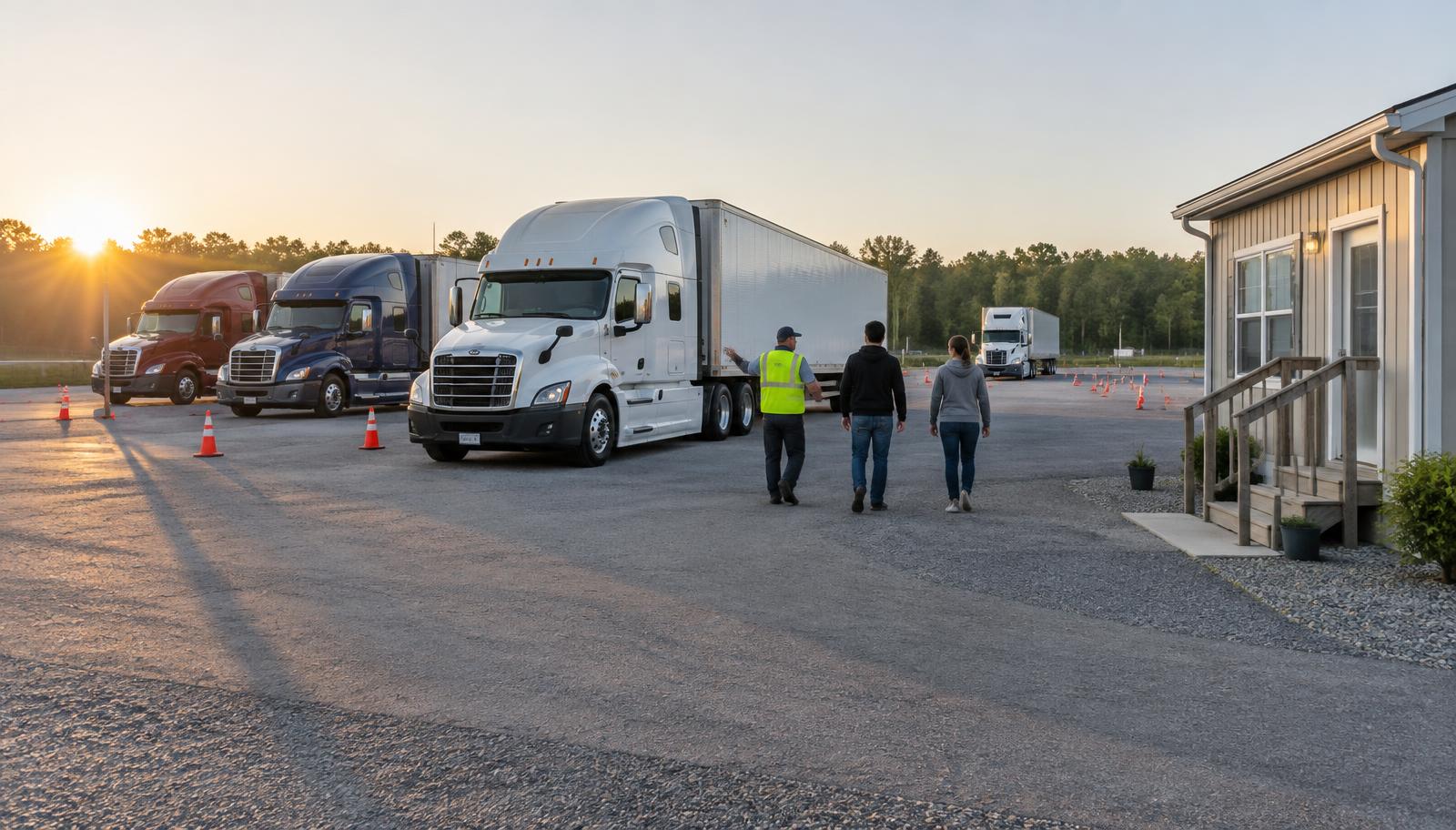
Private CDL schools have something most online businesses do not: a physical product prospects can inspect.
Your trucks are real. Your range is real. Your instructors are real. Your classroom is real. Your students are actually backing trailers, performing pre-trips, coupling equipment, and driving on public roads.
Show it.
In one recent ten-school visual review, all ten reviewed pages showed trucks or fleet imagery. Only five clearly showed instructors actively teaching students.
That distinction matters.
- A fleet picture proves you have trucks.
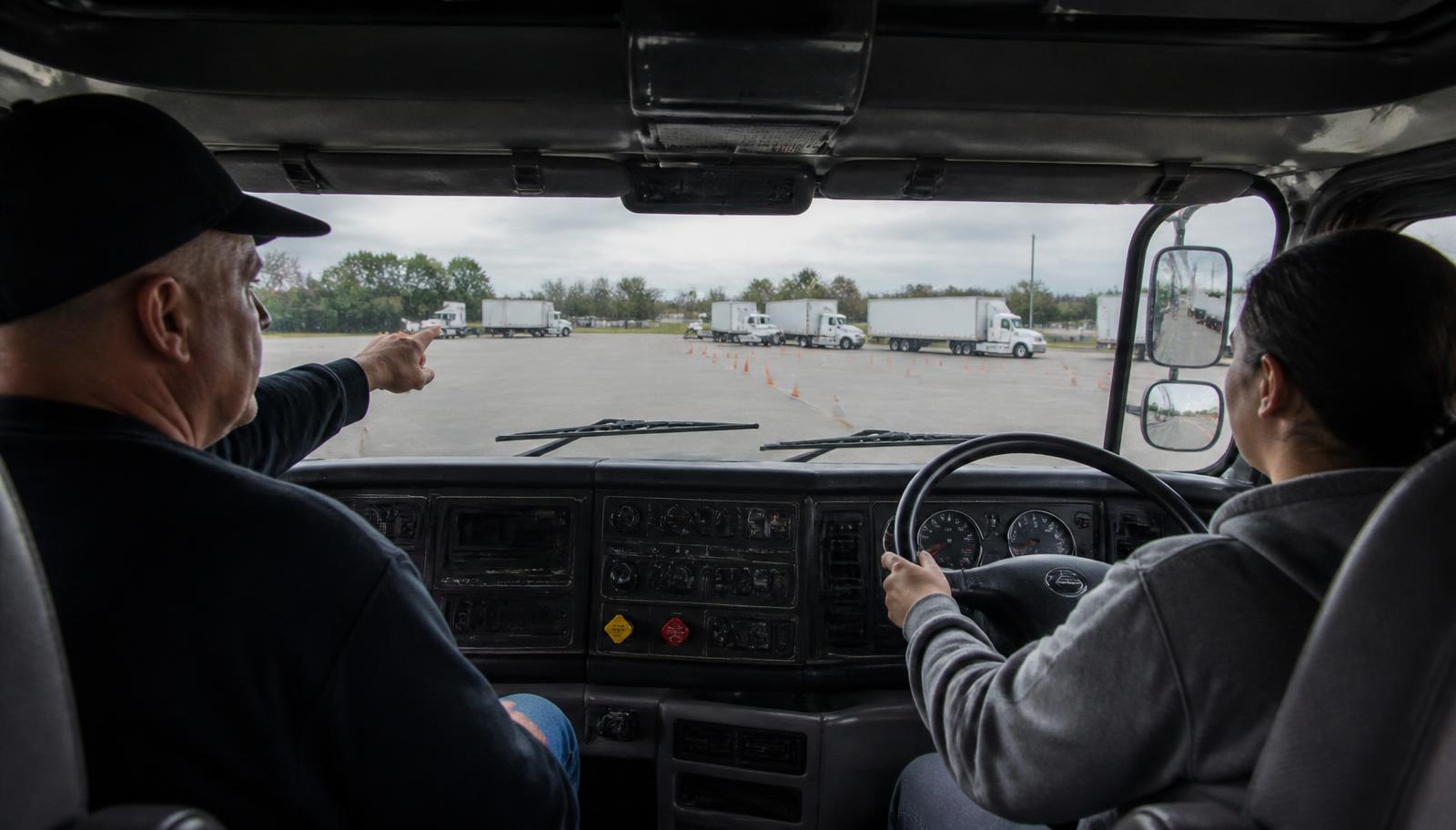
- A picture of an instructor standing next to a student while explaining a maneuver shows how training happens.
- A graduation picture proves somebody finished.
- A picture of current students actually training shows what the student is paying for.
For CDL schools, strong visual proof should not mean five polished hero shots. It should mean current, useful images throughout the website.
Your most persuasive picture may not be a perfectly staged truck at sunset. It may be a wide-angle photo of your training yard with actual training happening.
“160 Hours” Doesn’t Answer the Question Students Actually Have
CDL schools love talking about program hours.
160-hour program. 200-hour program. Four-week program. Three-week accelerated program.
Those numbers matter. But they don’t tell a prospect how much time they will personally spend behind the wheel.
“160 hours” tells a prospect how long the program is. It doesn’t tell them how much time they’ll personally spend driving.
Students regularly want to understand things such as:
- How many people share a truck?
- How many instructors are on the range?
- How much individual driving time will I actually get?
- How much backing practice will I receive?
- Will I practice on public roads?
- Can I get additional practice if I am struggling?
- What happens if I fail the skills test?
Federal Entry-Level Driver Training rules establish training requirements for covered applicants, but federal rules do not turn your advertised total program hours into an explanation of the actual student experience.
That explanation is your job.
Instead of simply advertising 160-Hour Class A Program, explain what those hours actually mean.
- What portion is theory?
- What happens on the range?
- What happens on public roads?
- How are students rotated through trucks?
- What equipment will they train in?
- What happens when somebody needs additional practice?
That information doesn’t make your program look weaker. It makes your program easier to understand. And clarity builds confidence. We covered what students actually need to know about CDL training time in more detail.
Class A vs. Class B Should Be a Career Conversation, Not an Upsell
Our Class A-versus-Class B research exposed another common gap.
We reviewed ten private CDL school websites offering both programs. Eight clearly published separate training lengths or hours. Seven clearly published prices for both programs.
But only four clearly explained the vehicle or job differences well enough to help someone understand which program might fit their goals.
That’s a problem.
A prospect saying “I want to be home every night” has not told you which license they need. Neither has someone saying “I want to make the most money,” or “I just want to drive locally.”
Those are career goals. Your admissions team still needs to understand the vehicle, employer, endorsements, restrictions, and work environment the student is targeting.
A student interested in driving a school bus may need a very different path from someone interested in dump trucks. Both may involve Class B. Someone wanting to operate tractor-trailers likely needs Class A.
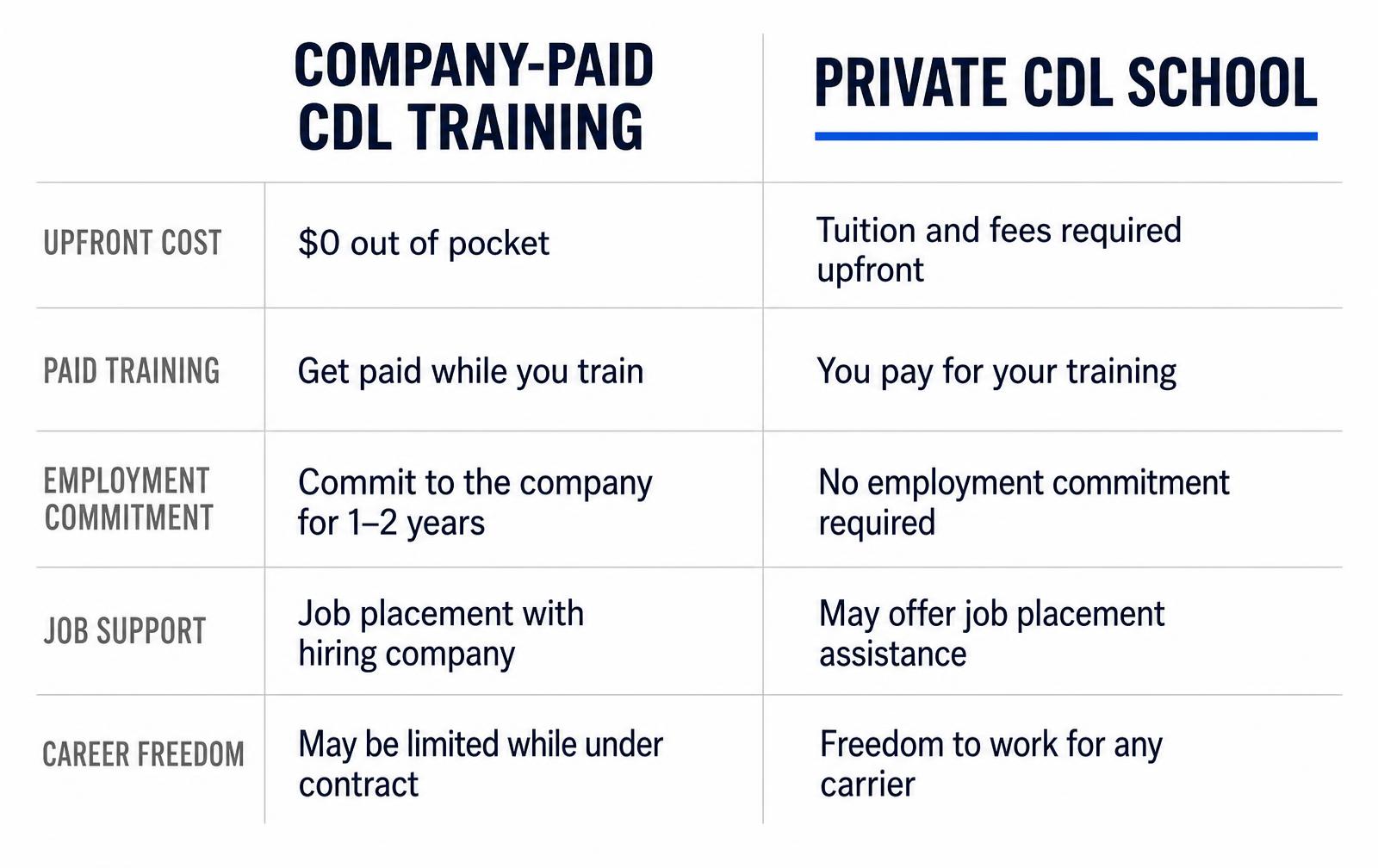
But obtaining Class A does not guarantee that a local employer will hire that person without tractor-trailer experience. Many students are also weighing company-paid CDL training versus private CDL school at the same time.
The best schools will stop asking “Do you want Class A or Class B?” and start asking “What kind of driving job are you trying to get?”
Then help the student work backward from there.
Your Existing Class B Drivers Should Not Be Put Through a First-Time Student Funnel
Our Class B-to-A research produced one of the strongest opportunities.
Federal ELDT rules specifically address drivers upgrading an existing Class B CDL to Class A. Qualifying Class B CDL holders can use the narrower Class B-to-A theory curriculum rather than repeating the entire standard Class A theory curriculum.
They still must complete the applicable Class A behind-the-wheel training and demonstrate proficiency. That distinction matters.
Yet in our ten-school Class B-to-A upgrade review:
- 7 of 10 published a specific upgrade price.
- Only 5 of 10 clearly quantified the upgrade duration.
- 6 of 10 clearly explained the theory and behind-the-wheel pathway.
- Only 4 of 10 clearly explained transmission or restriction implications.
- Only 3 of 10 clearly explained the complete eligibility pathway.
An experienced Class B driver may already work in construction, waste, municipal transportation, delivery, or another commercial-driving role.
They do not need a generic email sequence saying “Thinking about becoming a truck driver?” They are already commercial drivers.
They may need to know:
- How quickly can I complete the upgrade?
- Can I train around work?
- Does my employer pay for it?
- Do you train in manual equipment?
- What restrictions could I receive?
- Is the test truck included?
- What happens if I already completed theory somewhere else?
That’s a different lead. Treat it like one.
CDL Growth Intelligence
What Our Recent CDL School Research Keeps Finding
Five findings from five separate reviews. Each bar comes from its own ten-school review, so read them side by side, not as one combined study.
- Reviewed visual pages showed real truck or fleet imagery10/10
- Reviewed visual pages clearly showed instructors actively training students5/10
- Reviewed Class A/Class B program paths clearly explained job or vehicle differences for both programs4/10
- Reviewed Class B-to-A upgrade pages published a specific upgrade price7/10
- Reviewed refund-policy paths had an identifiable public refund-policy page or link7/10
Recent Truck School Marketing research reviewed selected groups of private CDL school website paths across several enrollment topics. Each finding comes from its own ten-school review. These are directional findings and are not nationally representative industry statistics.
Your Campus Tour Should Be Part of the Enrollment Process
One of the best opportunities we found has almost nothing to do with traditional marketing: the campus tour.
A qualified prospect who wants to physically visit your school is giving you a serious buying signal. Yet many schools treat tours casually.
Across the tour paths we reviewed, schools were generally willing to let prospects visit. Far fewer clearly explained whether the appointment was actually confirmed, where the visitor should arrive, how long the visit would take, what they would see, how to reschedule, or what would happen afterward.
That can be fixed without spending another dollar on advertising. The process should look more like:
- Tour Requested
- Tour Confirmed
- Tour Attended
- Questions Documented
- Next Step Agreed
- Follow-Up
A missed visit shouldn’t instantly become a dead lead.
- Maybe the prospect couldn’t leave work.
- Maybe childcare fell through.
- Maybe they drove to the office while your range was several miles away.
- Maybe nobody clearly confirmed the appointment.
You don’t know until you track it.
Your CRM should distinguish a requested appointment from a confirmed appointment, a canceled appointment, a rescheduled appointment, and an actual no-show.
A requested tour, confirmed tour, canceled tour, rescheduled tour and true no-show are five different enrollment events.
That may sound like a small operational detail. It isn’t. That is enrollment infrastructure, and it is the core of CDL student recruiting and automation.
Tell People Where Training Actually Happens
This sounds obvious until you start looking at CDL school websites.
Some schools have one facility. Others may have an admissions office, a classroom, a training range, a testing location, or multiple campuses.
Your website needs to make the difference clear.
- If the prospect enrolls at one address but trains somewhere else, say that.
- If the classroom and range have different hours, say that.
- If someone needs to park in a specific lot or check in at a particular entrance, say that.
- If CDL testing happens somewhere else, explain that too.
The goal isn’t simply better local SEO. The goal is eliminating avoidable friction. Accurate locations in your Google Business Profile and on your website both help.
Nobody should have to submit a lead just to find out where the trucks are.
Financial Transparency Doesn’t End With Publishing Tuition
Publishing tuition is a good start. It is not the full financial conversation.
Students also want to understand:
- What does the deposit reserve?
- Which fees are included?
- What happens if funding doesn’t come through?
- What happens if the student cancels?
- What happens after training begins?
- What happens if the school moves the class?
- What happens if a private lender financed the tuition?
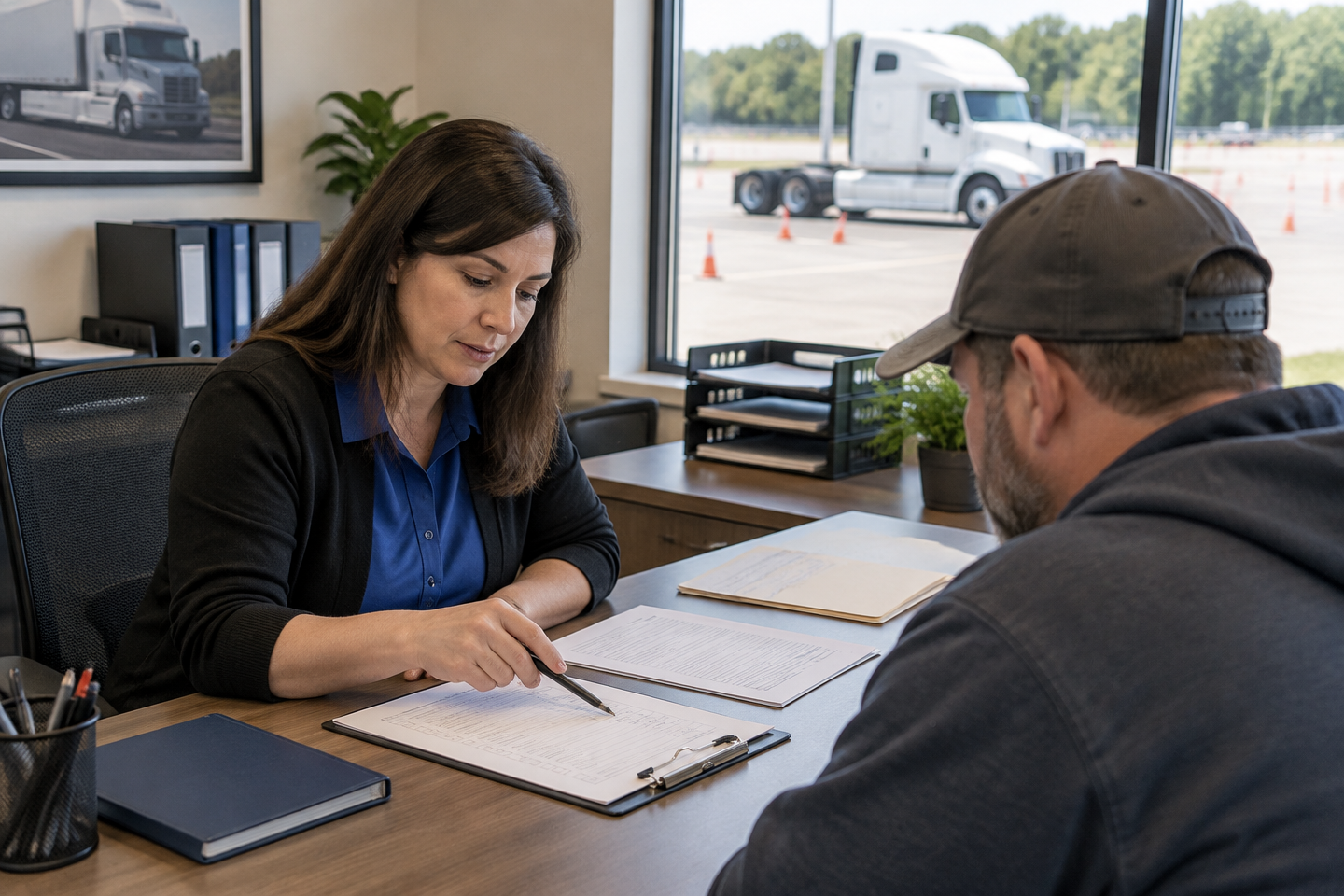
Our recent ten-school refund review found that 7 of 10 reviewed public paths had an identifiable refund-policy page or link.
- Only four clearly explained the pre-start cancellation outcome.
- Only five clearly explained post-start refund treatment.
- Only two clearly explained how a cancellation notice should actually be submitted.
That does not mean the other schools lack refund policies. Many may provide them in enrollment agreements or catalogs.
But that is exactly the issue from a prospective student’s perspective. The answer may not appear until late in the enrollment process.
Refund requirements can also differ substantially by state, funding type, program, and payment arrangement. Schools should not copy another school’s refund language. They should make their own approved policy easier to find and easier to understand.
The marketing lesson is simple: don’t hide the financial rules until after somebody is emotionally committed.
Clear policies don’t scare the right students away. They tell people what they are agreeing to.
The Bigger Pattern
None of these issues live in isolation.
- The person who finds you through Google wants to know whether the school is legitimate.
- The person visiting your website wants to understand the program.
- The person comparing schools wants to understand training access, schedule, tuition, and equipment.
- The person requesting a tour needs directions and confirmation.
- The person considering a deposit wants to understand the financial commitment.
- The current Class B driver wants an upgrade path that acknowledges their experience.
And the enrollment team needs all of that information preserved as the lead moves through the process.
The Student Journey
Marketing does not stop when the lead is generated.
- 01Google Search / MapsDiscovery
- 02School WebsiteResearch
- 03Program ComparisonTrust
- 04Proof & TransparencyIntent
- 05Call / Form / TourConversation
- 06Enrollment Follow-UpDecision
- 07Class StartEnrollment
That is why I don’t think the next generation of CDL school marketing will be about who creates the most ads. It will be about who builds the clearest student journey.
One where:
- the website answers the obvious questions.
- Google shows accurate information.
- photos prove the operation is real.
- forms preserve what the student is interested in.
- automation follows up based on that interest.
- admissions doesn’t restart the conversation every time.
- tours have a defined process.
- and the student understands what happens between clicking Learn More and actually starting class.
That is not just better marketing. It is a better enrollment system.
What I Would Audit First
If I owned a private CDL school today, I would open my website on my phone and pretend I knew absolutely nothing about the business. Then I would answer one question:
Can a prospective student understand what they are buying without talking to me?
Before a Prospect Contacts You, Can Your Website Answer These?
- Which program fits their career goal?
- What does tuition actually cost?
- What major fees should they expect?
- When is the next class?
- Where does training happen?
- What trucks will they train in?
- Are they training and testing in manual or automatic equipment?
- How much equipment and instructor access should they expect?
- Can they visit the campus?
- What happens if they fail a skills test?
- What happens if they cancel?
- What job support does the school actually provide?
- What is the next enrollment step?
If half of those answers require an admissions call, you have content opportunities.
If the answers exist but are buried across PDFs and old pages, you have a website problem.
If the website answers them but your CRM forgets everything the prospect just told you, you have an enrollment-process problem.
The opportunity for private CDL schools isn’t complicated.
The Takeaway
Answer more of the questions students already have, prove more of what you claim, and make the next step easier to take.
That is where better marketing starts.
Sources and Further Reading
FMCSA Training Provider Registry
Training requirements for entry-level CDL applicantsFMCSA
Entry-Level Driver Training (ELDT)Google Business Profile Help
Tips to improve your local ranking on Google