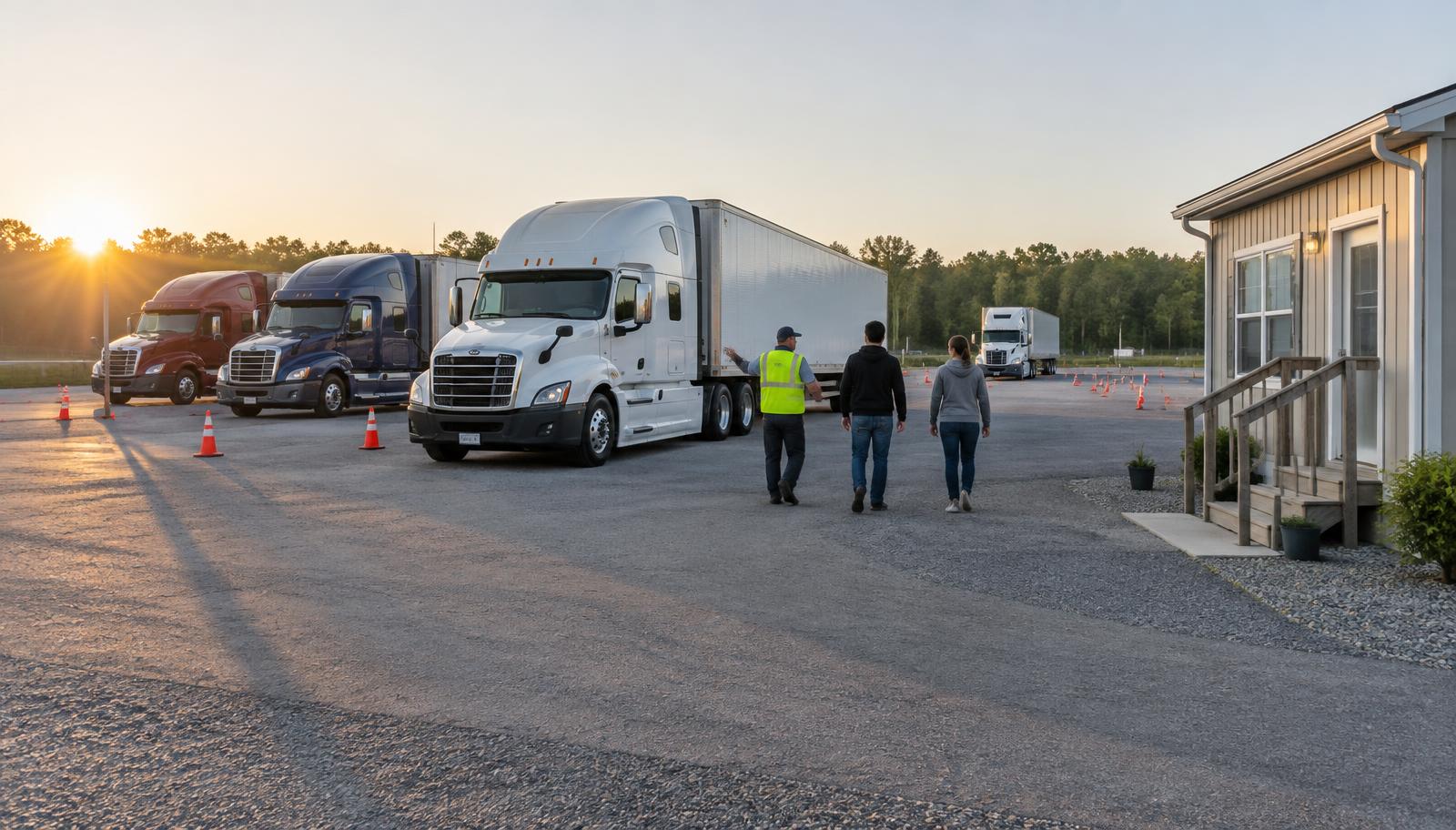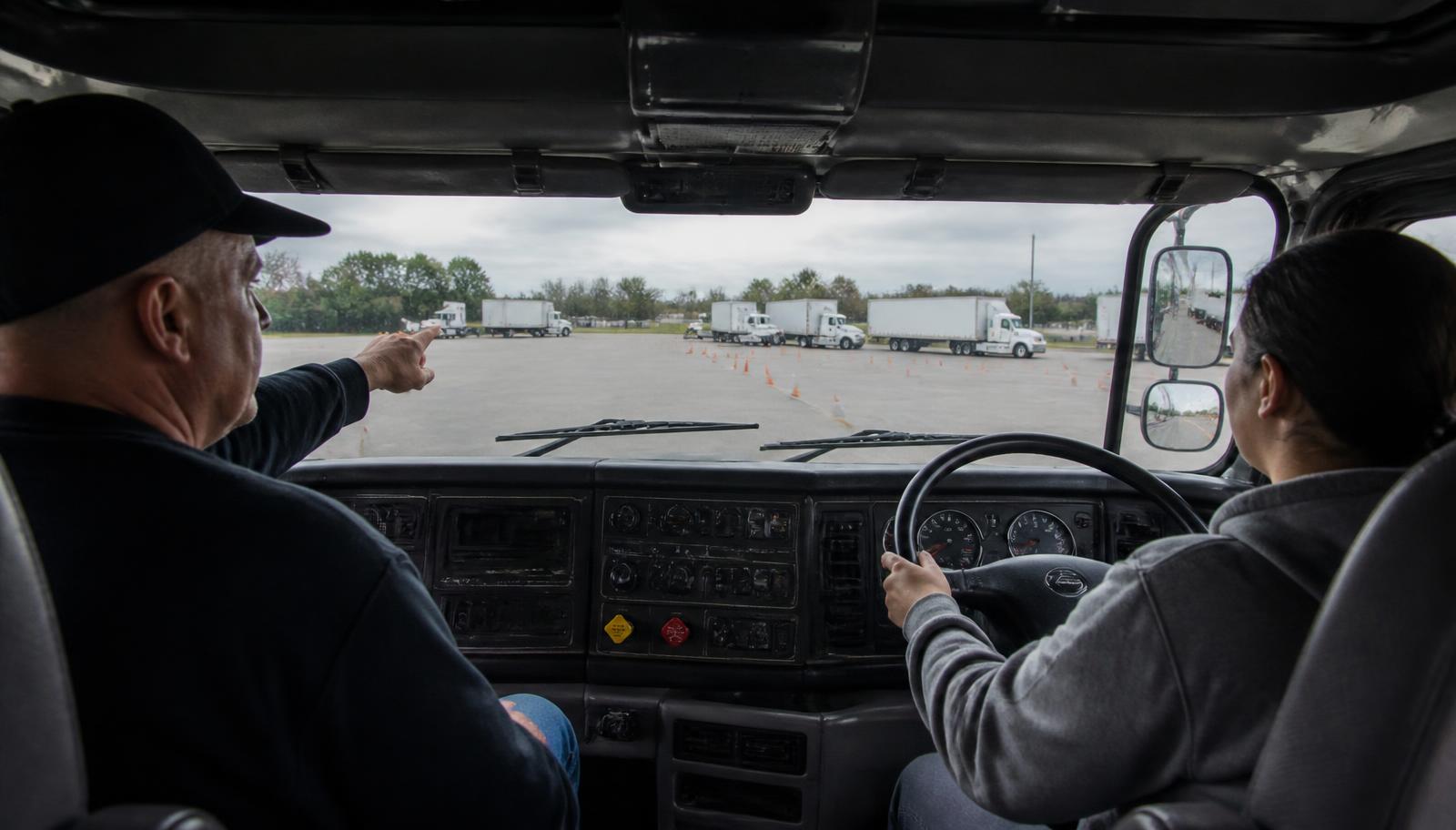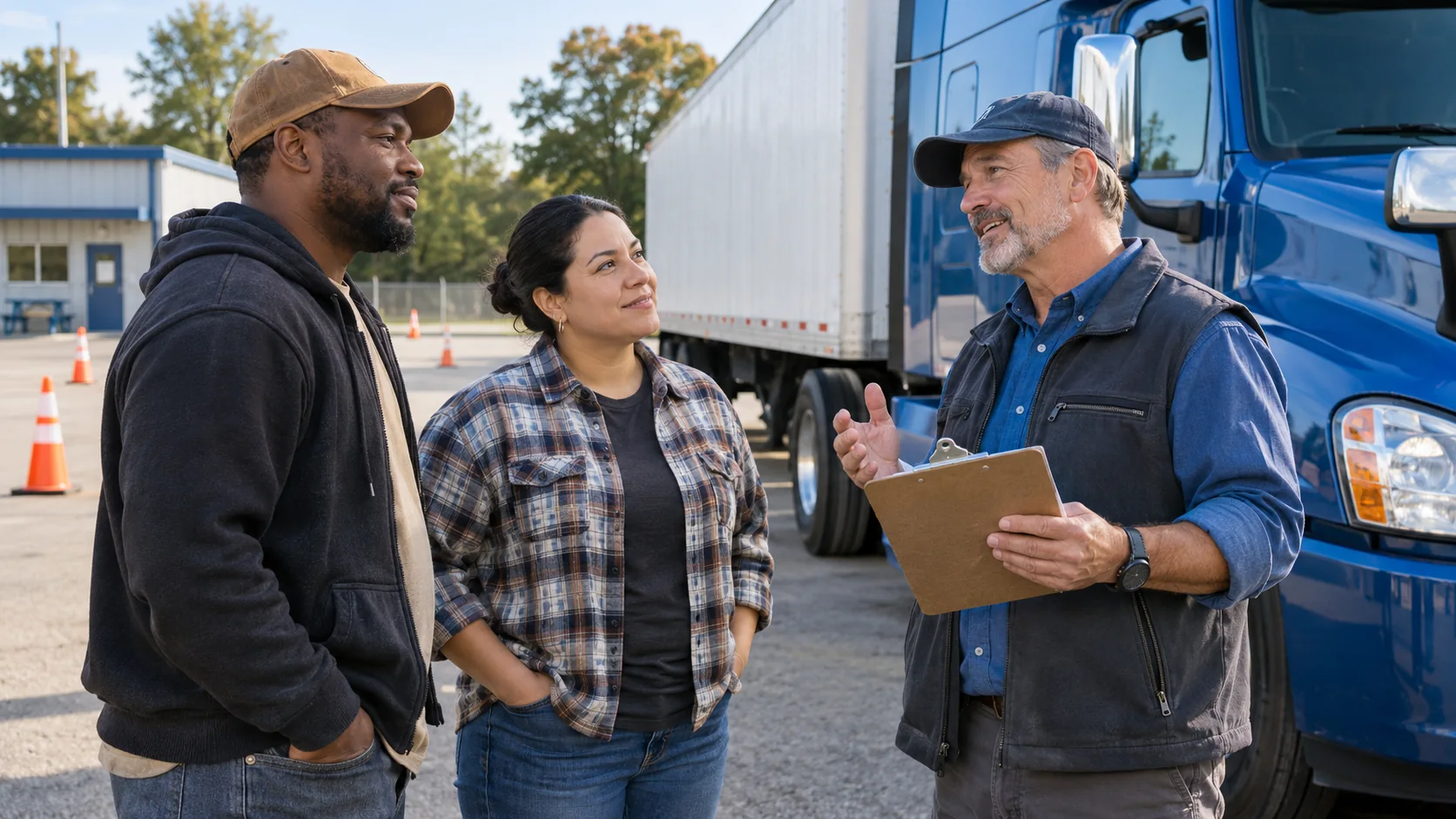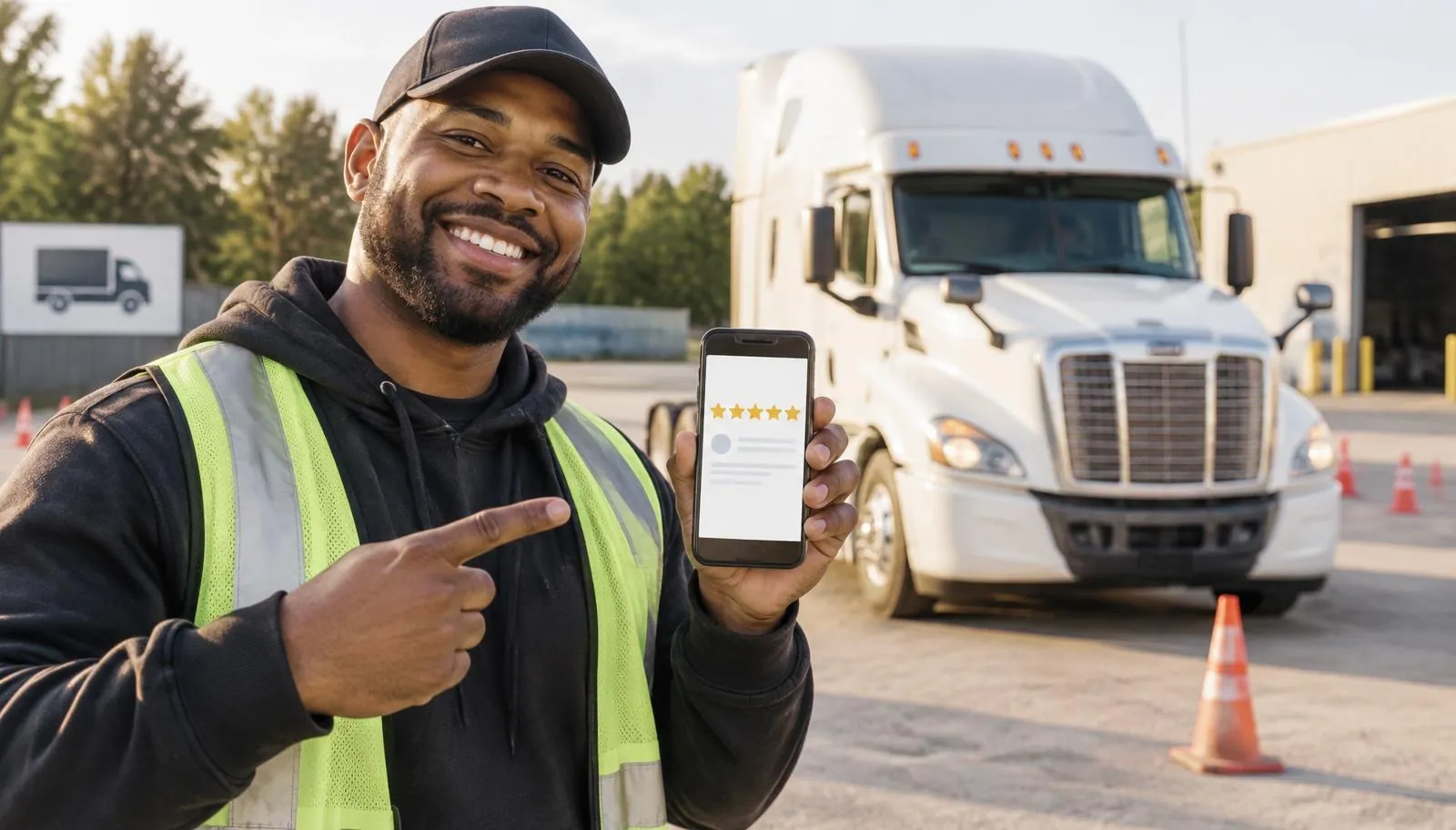
A prospective student finds your CDL school on Google. Your tuition fits their budget, and your next class starts soon. Then they open the reviews.
They want to know whether your instructors will help when backing does not click, whether they will get meaningful practice, and whether the schedule matches what admissions promised.
Your star rating introduces your school. The experiences behind it help explain what a student is signing up for.
For private CDL schools, a useful review process has three jobs: make honest feedback easy to leave, help prospects understand the training experience, and bring recurring problems to the people who can fix them.
Do Google reviews help CDL schools rank locally?
Google says local results mainly depend on relevance, distance and prominence. Its local ranking guidance says review volume and positive ratings can help local ranking. Reviews are one part of visibility; no review count guarantees the top position.
A school also needs accurate business information and a useful website. For an overview of how these pieces fit together, see our CDL school marketing and enrollment guide.
To evaluate where your school appears across its service area, explore Google Maps visibility for CDL schools.
The business question goes beyond where you rank: when someone finds your school, does the information help them feel comfortable contacting admissions?
What our ten-school research found
Our October 18, 2026 CDL Growth Intelligence research reviewed one selected public review, testimonial or student-story path for each of ten CDL school brands.
The strongest finding was a gap between displaying praise and giving that praise context.
| What appeared on the inspected paths | Clearly present |
|---|---|
| Substantive student feedback | 9 of 10 |
| Specific training details | 8 of 10 |
| A clear enrollment or contact action | 9 of 10 |
| Clear campus or location attribution | 6 of 10 |
| Explicitly 2026-dated student proof | 5 of 10 |
How to read these findings: This was a purposive, directional review of selected public paths, not a representative industry survey. Partial observations were excluded from the counts. Missing information on an inspected page does not establish that it was absent elsewhere. We did not verify review authenticity, measure actual response times, or test whether the pages increased enrollment. These are October observations, not a fresh November audit of all ten sites.
An older testimonial can still be useful. A national brand story can still be useful. But prospects should be able to tell which campus and training experience the story describes.
Show what training actually feels like
A student choosing a school needs more than broad praise. The useful details often involve coaching, practice, schedules, testing preparation and communication.
Our CDL school training transparency article explains why wheel time, truck access and retesting deserve clear answers on your website. Authentic student experiences can add context to those answers.
Two public examples show how this works:
- TransTech's Tyronia Carson story identifies its Charlotte campus, explains the importance of weekend classes, and describes instructor support through a backing challenge. Read the school-published student story.
- Southwest Truck Driver Training's Jimmy story discusses early struggles, repeated practice and confidence before testing. Read the school's graduate profile.
These are first-party marketing stories, not independent verification of outcomes. Their value as examples is the detail: a prospective student can understand a challenge and how the school says it helped.
Use the same level of clarity in your own permissioned student interviews. Ask what surprised the graduate, what was difficult, and what helped. Keep their account accurate. One graduate's experience does not establish a school-wide pass rate or guarantee a job.
Keep reviews connected to the right campus
If you have multiple locations, a prospect should not have to guess whether a testimonial describes the school they will attend.
For a website testimonial, include the campus, program and relevant date when known and permitted. Identify whether it is a Google review, a school interview or another type of student story. Link to the original public review source when available, and make it easy to reach the relevant campus information.
Midwest Truck Driving School's testimonials page provides an example of linking visitors to Google reviews alongside school-hosted material. Review feeds change, so evaluate the approach rather than treating a displayed rating or count as permanent.
Keep review text faithful to the original. Obtain appropriate permission before republishing student content, and follow the source platform's terms for embedded or reused material. Never attach one campus's review to another campus to make its reputation look stronger.
If you are building a new site, plan this into the CDL school website design: relevant proof near program information, followed by a clear way to contact admissions.
Ask for honest reviews without screening for praise
Google permits genuine review requests. Its Maps content policy prohibits incentives, discouraging negative feedback, selectively asking for positive reviews, and pressuring people to review on-site. It also prohibits requesting specific review content and staff review-solicitation quotas.
In practical terms, avoid a survey that sends satisfied students to Google while routing dissatisfied students only to a private form. That is review gating. A private support channel can sit alongside an equally accessible public review option.
Use a consistent, documented milestone for requests, without choosing recipients by satisfaction or passing results. Program completion is one possible milestone; it should not mean only successful test-takers receive an invitation. Participation should always be optional.
Google provides an official review link and QR-code feature. Use the correct campus link. A QR sign should offer an invitation, not put a student under pressure to post in front of staff.
Example review-request email
Subject: Share your experience with [School Name]
Hi [First Name],
Thank you for training with [School Name]. If you would like to share your honest experience, you can leave a Google review here:
[Official campus review link]
Your feedback is optional, and we welcome all perspectives. If you need help with an unresolved concern, you can also reach [contact name] at [phone/email].
Thank you,
[School team]
Use approved contact channels and honor communication preferences and opt-outs. The template is an editorial starting point, not a substitute for checking your messaging setup.
Federal rules are a separate layer. The FTC's Consumer Reviews and Testimonials Rule guidance addresses fake reviews and incentives conditioned on positive or negative sentiment, among other practices. The rule does not ban every sentiment-neutral incentive, but Google Maps prohibits review incentives. Schools requesting Google reviews should follow Google's stricter platform standard.
Respond to complaints and fix repeated problems
A negative review deserves a careful response. Start by understanding the concern, checking what happened internally and assigning someone who can address it.
Keep the public reply brief. Do not publish attendance records, payment details, medical information, test history or private conversations to defend the school.
Example response to a scheduling complaint
Thank you for raising this. We understand how important a dependable training schedule is. We'd like to review your concern directly. Please contact [name/role] at [phone/email] so we can discuss what happened and the available next steps.
Adapt the response to the facts. Do not promise a refund, extra training or another remedy before confirming what the school can provide. If a review appears to violate platform policy, use Google's reporting process; disagreement alone does not establish a violation.
Then look for patterns. Several complaints about truck availability deserve an operations conversation. Repeated confusion about weekend attendance may mean admissions and the website need to explain the schedule more clearly.
The goal is to resolve the underlying problem and reduce the chance of the next student experiencing it.
Bring review questions into admissions follow-up
When a prospect mentions a review, ask which part concerns them.
If they are worried about practice time, explain your actual training model. If they are worried about scheduling, show the current schedule. If they question job assistance, explain the services your school provides without promising employment.
Record the concern, campus and agreed next step in your recruiting system. Send the relevant information and offer an instructor conversation or campus visit when appropriate. A CDL school CRM and follow-up process can help staff keep that context through later conversations.
Track whether the prospect reached admissions, attended a tour and started training. A review-link click is not an enrollment, and a prospect mentioning Google does not isolate reviews as the cause of the sale.
A practical first week
| Step | What your team should do |
|---|---|
| 1. Check each campus | Confirm the correct Google profile, review link and contact information. |
| 2. Read for themes | Group feedback around instruction, practice access, equipment, schedules, testing, costs and communication. |
| 3. Compare promises | Check whether your website and admissions explanations match the experience described. Investigate discrepancies. |
| 4. Improve proof | Add relevant, permissioned student stories with accurate campus and program context. |
| 5. Standardize requests | Choose a neutral milestone, remove satisfaction screening and make participation optional. |
| 6. Assign ownership | Decide who handles replies, private follow-up and recurring operational concerns. |
| 7. Test on a phone | Follow the path from Google to the campus page, program information and admissions contact. |
Start with the gap that creates the most uncertainty for your students. A clear schedule or practice policy may do more for confidence than another row of generic testimonials.
Frequently asked questions
How many Google reviews does a CDL school need?
There is no published universal threshold that guarantees rankings or enrollment. Compare your local market, but prioritize genuine feedback and a dependable process over a review-count target.
Can we offer a gift card for an honest Google review?
No. Google's policy prohibits incentives for posting, changing or removing reviews, even when you do not require a positive rating.
Can we publish student testimonials on our website?
Yes, with appropriate permission, accurate attribution and attention to applicable platform terms. Do not imply that one student's experience guarantees the same result for everyone.
Will a Google review widget give our website star ratings in organic search?
Do not expect that result. Google's review-snippet documentation makes self-serving reviews about a business on its own site ineligible for the LocalBusiness or Organization star-review feature, including reviews displayed through third-party widgets. That restriction is separate from reviews appearing on your Google Business Profile.
Make your school's reputation easier to evaluate
Your best proof helps prospective students understand the school they will actually attend. Keep the source clear, the campus relevant and the next step easy to find. Use feedback to improve the experience behind the marketing.
Want help connecting your school's Google presence, website and admissions process? Book a Discovery Meeting.
Sources and research method
Original research: Truck School Marketing's CDL Growth Intelligence, October 18, 2026. Ten selected public paths: Roadmaster, 160 Driving Academy, Truck Driver Institute, SAGE, TransTech, Midwest Truck Driving School, Southwest Truck Driver Training, ATDS, DTR School of Trucking and U.S. Truck Driver Training School. The audit evaluated visible feedback, training detail, date, campus attribution and next-step access. It did not rank schools or independently validate their students' outcomes.
Official guidance and examples linked in this article were rechecked November 17, 2026. The ten-school counts retain their original observation date. Rules and public pages can change.